Why Tasty Donuts Is the Sweetest Addition to Your Design Toolkit
In the world of graphic design, typography is rarely just about readability. It is about personality, mood, and that immediate, visceral reaction a viewer has when they first look at a piece of work. We have all seen it: a poster or a social media post that stops the scroll not because of complex imagery, but because the text itself feels like an experience. This is where Tasty Donuts enters the conversation. It is not merely a font; it is a statement piece, a chunky lettered display typeface that brings a specific kind of joy and energy to any project.
If you are looking to inject warmth, playfulness, and a touch of nostalgia into your designs, understanding the nuances of this cute and colorful display font is essential. Let’s dive into why this typeface is becoming a favorite among designers who want their work to pop, and how you can leverage its unique characteristics to make your projects come alive.
The Anatomy of Fun: What Makes Tasty Donuts Unique?
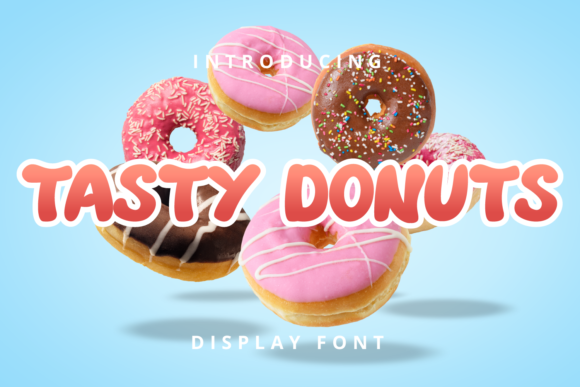
At first glance, Tasty Donuts is defined by its robust, rounded forms. Unlike sleek, minimalist sans-serifs that dominate corporate branding, this font embraces imperfection in the most charming way possible. The letters are thick, bold, and slightly irregular, mimicking the hand-drawn quality of a baker piping frosting onto a fresh pastry. This "chunky" aesthetic is not accidental; it is designed to evoke feelings of comfort and indulgence.
The primary characteristic of Tasty Donuts is its weight. Each character carries visual heft, making it impossible to ignore. When used as a display font—meaning for headlines, titles, and short bursts of text rather than body copy—it commands attention. The curves are soft, avoiding sharp angles that might feel aggressive or cold. Instead, the typography feels inviting, almost huggable. This makes it particularly effective for brands that want to appear approachable, friendly, and human.
Furthermore, the font’s structure allows it to handle color with ease. Because the shapes are so distinct and solid, they serve as perfect canvases for vibrant gradients, pastel hues, or even textured fills. Imagine the word "Summer" rendered in Tasty Donuts, filled with a sunset gradient of orange and pink. The chunkiness of the letters ensures that the colors don’t get lost; instead, they amplify the font’s inherent cheerfulness.
Where Tasty Donuts Shines: Ideal Use Cases
One of the biggest mistakes designers make with display fonts is overusing them. However, when applied correctly, Tasty Donuts can transform a mundane layout into something memorable. Here are several scenarios where this font truly excels:
- Food and Beverage Branding: It goes without saying that a font named after a sweet treat works beautifully for cafes, bakeries, ice cream shops, and restaurants. The association between the rounded letters and the concept of baked goods is subconscious but powerful. A menu header using Tasty Donuts immediately suggests freshness and homemade quality.
- Event Posters and Invitations: Whether it’s a birthday party, a children’s carnival, or a casual community fair, the playful nature of this font sets the right tone. It signals to the attendee that the event will be fun and relaxed. For kids' parties specifically, the font’s whimsical shape mirrors the excitement and chaos of childhood.
- Social Media Graphics: In the fast-paced world of Instagram and TikTok, text overlays need to be legible and striking within milliseconds. The high contrast and bold outlines of Tasty Donuts ensure that your message is read instantly, even on small mobile screens. It adds a layer of polish to user-generated content or promotional reels.
- Kids’ Products and Educational Materials: For toys, clothing lines, or educational apps targeting young children, Tasty Donuts offers a sense of safety and play. It avoids being too childish in a cheap way; instead, it feels curated and stylish, appealing to parents who want aesthetically pleasing products for their homes.
Pairing Strategies: Balancing Boldness with Readability
A common question from designers new to display fonts is, "What do I pair this with?" Since Tasty Donuts is a heavy, attention-grabbing typeface, it needs a partner that can ground the design without competing for attention. The golden rule here is contrast in style, not necessarily in weight.
Because the display font is so expressive, pairing it with a clean, simple sans-serif or a classic serif creates a beautiful balance. For instance, if you use Tasty Donuts for the main headline of a blog post or a flyer, use a lightweight sans-serif like Helvetica Neue Light or Lato for the body text. This ensures that while the eye is drawn to the fun title, the information remains easy to digest.
Another effective strategy is to use monochrome backgrounds. If your background is busy or colorful, keep the Tasty Donuts text white or black with a strong outline. This technique, often called "cutout" typography, allows the chunky letters to stand out sharply against the backdrop. Conversely, if your background is plain, you can experiment with filling the letters with patterns or images, letting the font act as a mask for your visual storytelling.
Practical Considerations for Implementation
Before downloading and implementing Tasty Donuts into your next project, there are a few practical considerations to keep in mind to ensure professional results.
- Limited Character Set Awareness: Display fonts sometimes lack extensive character sets compared to system fonts. Check if the font includes necessary punctuation, numbers, and special symbols before finalizing your design. You may need to manually create certain elements if they are missing.
- Kerning and Tracking: Due to the rounded nature of the letters, standard kerning settings might not always yield the best visual spacing. You may need to manually adjust the space between certain characters, especially those with ascenders and descenders (like 'b' and 'g'), to prevent awkward collisions or gaps.
- Legibility at Small Sizes: While Tasty Donuts is great for headlines, it loses its impact and becomes difficult to read when scaled down too small. Avoid using it for footnotes, captions, or dense paragraphs. Reserve its power for large-scale applications where its personality can shine.
- Color Psychology: The font itself is neutral until colored. Be mindful of the emotions different colors evoke. Pastels enhance the "cute" factor, while neon colors push it into a more retro, energetic territory. Choose your palette based on the specific vibe you want to convey.
Adding Life to Static Designs
Ultimately, the goal of any good design is communication. But beyond communicating a message, good design communicates a feeling. Tasty Donuts is a tool that specializes in the latter. It takes static pixels and gives them a bounce, a wiggle, and a sense of movement. It reminds us that design doesn't always have to be serious to be effective.
In an era where digital fatigue is real, audiences are craving content that feels authentic and joyful. By adding this chunky lettered font to your designs, you are tapping into that desire. You are creating something that looks less like a computer-generated template and more like something crafted with care and enthusiasm. Whether you are designing a logo for a local bakery or a banner for a summer sale, Tasty Donuts provides the perfect sprinkle of creativity to make your work stand out in a crowded marketplace.
So, the next time you find yourself staring at a blank canvas, wondering how to break the monotony, consider reaching for Tasty Donuts. Notice how it changes the entire atmosphere of the page. It’s not just about choosing a font; it’s about choosing the right voice for your brand’s story. And sometimes, that voice just needs to be a little bit sweeter.